
Leadershit

At the start of 2000, the US had its largest fiscal surplus ever. That cushion soon vanished in the Bush tax cuts for the wealthy and war in Afghanistan. After putting the nation back on the big debt path, Bush praised his head of FEMA post-Hurricane Katrina for doing “a heck of a job Brownie.” Ten days later, Michael Brown resigned as FEMA head after one heck of a screw up.
Out of touch, incompetent, spineless, and corrupt is how people describe their elected representatives. Less than 20 percent of citizens approve of the job the US Congress does. Other government branches don’t fare much better.
Things the majority of citizens want never get done. People want stricter gun controls. The average of two mass shootings per day in the US might have something to do with that. A strong majority want the government to rein in the high cost of drugs. More than 20 percent of Americans say they can’t afford to pay for their prescribed medications. People are fed up with endless wars but bombs keep falling. Around 80 percent of Americans want the government to tax wealthy individuals and corporations more. Naturally, Congress slashed taxes for the super-rich and ballooned the deficit by $4 trillion. Solution: cut Medicaid and food stamps for the neediest. The federal minimum wage was last raised in 2009. The majority of Americans support raising it to $17+ per hour. An overwhelming majority of 86 percent want to ban Members of Congress and their families from enriching themselves by trading stocks, while elected officials see their own insider trading as proof that the “free market” is functioning.
After the market crash of 2008, George W. Bush was quick to abandon his free-market ideals to bail out GM and Chrysler. Before Obama entered the White House following the 2008 financial crisis, he pledged not to govern by adhering to the market dogma of powerful elite lobbyists infesting Washington, DC.
The new leader who promised “Change We Can Believe In” had a stark choice: help individual homeowners or bail out investors. He chose to abandon his base and appoint Wall Street insiders as advisors; faithfully following their disinterested advice. Millions who voted for “hope” and “change” felt betrayed and later turned to MAGA hoping for real change.
To show bankers deep gratitude for their fraudulent activity that nearly destroyed the economy, none went to jail. Instead, US tax money bailed out the reckless banks and bankers celebrated with outrageous bonuses while people lost their homes. Luckily, some folks had cars to live in and sleeping bags to keep warm. It truly warms the heart when government helps those who already have the means to help themselves. Wall Streeters need a helping hand? “Yes We Can!”
Priorities in government are not set by the people, but by the army of corporate lobbyists who write laws today. This ensures that “free market” corporations continue receiving direct subsidies and tax breaks of over $700 billion every year. Exxon Mobile makes over $36 billion in profit annually, but its leaders still lobby for financial breaks and help from taxpayers.
Boeing’s leaders diligently ditched the company’s engineering excellence and cut corners on safety in the drive to maximize shareholder value. To jack up their stock options, corporate leaders outsourced engineering for the new 737 MAX aircraft to low-paid Indian coders. After the planes started dropping from the sky, an astonishing wave of suicide suddenly hit Boeing insider whistleblowers; preventing any from testifying about the company’s dangerous decline in safety. Truly a coincidence of Epsteinian proportion!
The fuse for the shareholder value bomb was lit in the 1980s by “Neutron Jack”. Jack Welch was worshipped as the greatest leader of his generation by Wall Streeters. His genius was for “ranking and yanking” employees. He proudly fired 10 percent of GE employees annually over 10 years. Jack was rewarded with the highest salary ever for ruthless cost-cutting and his visionary focus on short-term quarterly earnings. A model for Wall Street as a true American leader, he thought only in the short-term and shipped thousands of well-paying jobs overseas. After retiring with over $400 million in severance pay, the GE stock plummeted, and the company became a shell of its former glory. GE sank from the most valuable company in the world to being removed from the Dow Jones Industrial Average.
A more recent financial leader lauded by presidents, celebrities, and corporate titans was Sam Bankman-Fried. This wonder boy of Wall Street ponzied up his FTX crypto exchange to dizzying heights within 18 months. He made a billion faster than anyone in history. The party didn’t last long though. As the FTX scam collapsed, Sammy slyly relocated over $8 billion of his customers’ money to his account. Just a clerical error of course. It could happen to anyone.
It wouldn’t have happened if Jim Sinegal had been at the helm though. The billionaire co-founder and CEO of COSTCO had a battered old desk tucked away in the back of the warehouse as his office. He was a hands-on guy who paid his employees well and provided them with premium healthcare benefits. Naturally, Wall Street analysts pestered him constantly to cut wages, cut staff, and cut benefits. They were flabbergasted that COSTCO served customers and employees much better than it served shareholders. What an outdated American concept!
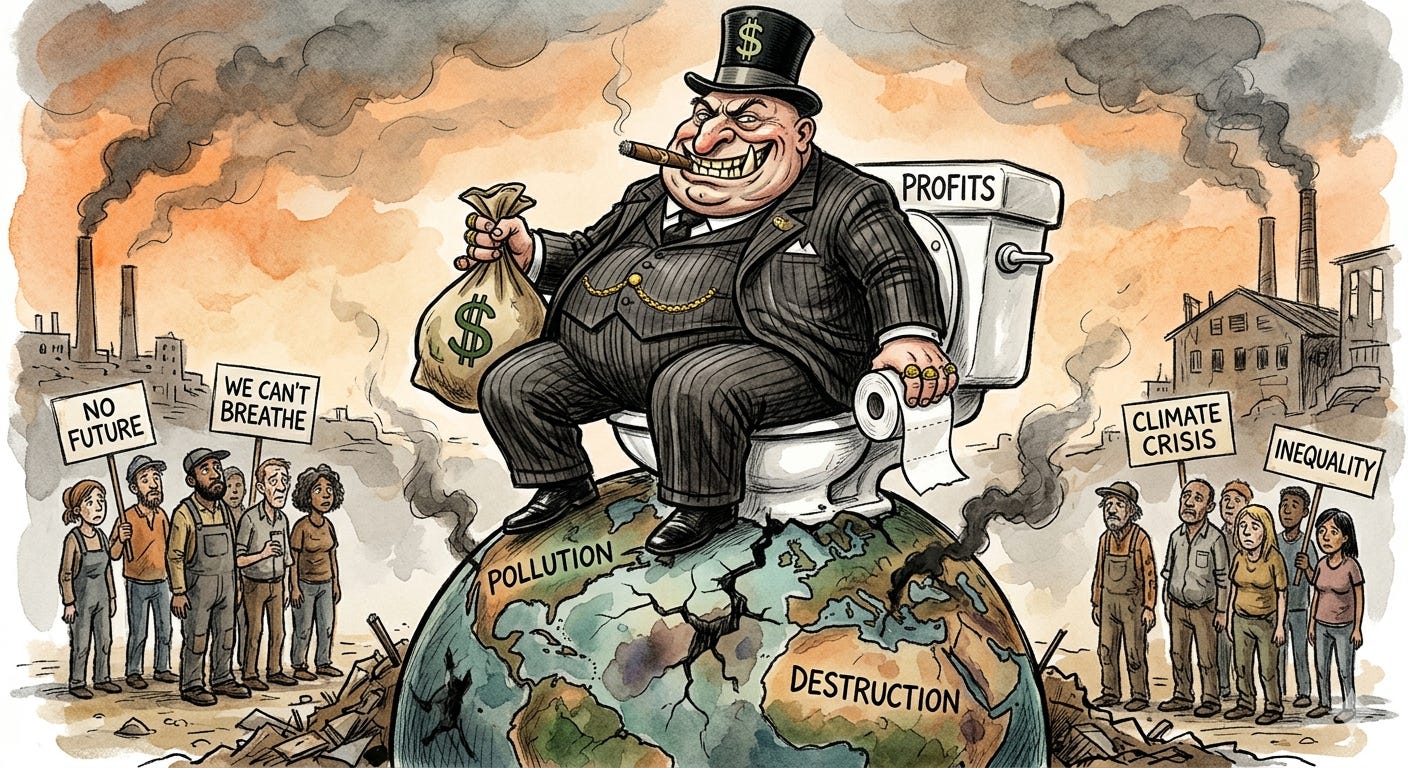
Capitalism today is about ranking and yanking for the sole benefit of shareholders and financial interest groups. Leaders of the financial class cheer on accelerating the race to the bottom as they leech all the profits while complaining about taxes and financial regulations.
People who boast about their leadership skills usually are poor leaders. The best leaders often must be coaxed into leadership positions. Those in it for money, status, and control make lousy leaders. Good leaders are passionate about the organization and are loyal to co-workers. They are not self-interested, put others before themselves, and lead by example. They enable others to succeed and sacrifice for subordinates. When necessary, they pick up the slack instead of piling work onto others. They know that people are the most valuable asset in any organization. People readily follow them.
Naturally, we want good political leadership but often forget that in a democracy the government is ours. Its vitality requires the active participation of citizens.
Government is the only large, organized mechanism allowing people to strive for the greater public good rather than individual gain. Without sharing a level of disinterest for the public good of our community, our lives are reduced to a focus of concern only for our immediate needs. This narrow individualism opens us to manipulation by interest groups intent on transferring power and resources from the public to themselves.
Such leadershits smugly proclaim that it’s good to disparage the idea of the public good and dismantle the public commons. Good for whom?
Lol the title of this is absolutely hilarious. Enjoyable read
Thanks!